Wednesday, October 2, 2013

WATER RESOURCES MANAGEMENT GE:340 (NOTES)

TOPIC ONE
WATER AS A RESOURCE


Description of the name given to the course.
Water Resources Management 
•      Water Resources Management (WRM)
 Is the skillful  process use of water resources for present and future generation.
Definition of terms
•       Water
•      Resource
•      Water resources
•      Management
Water
Is a chemical substance which at room temperature is in liquid form, transparent, colorless, and odorless.
The chemical formula  for is  H2O:
One molecule of water has two hydrogen atoms covalently bonded to a single oxygen atom.
Forms/ states of water
Ø Solid  (Ice)- At 0 °C and below
Ø Liquid (water)- between 0 and 100 °C.
Ø Gas (Water vapor/steam) above 100 °C
A resource
Is anything that has value to human being.
-Is there any value of water to man?
-If water has any value to man then water is a resource.
-Water is essential to human life;
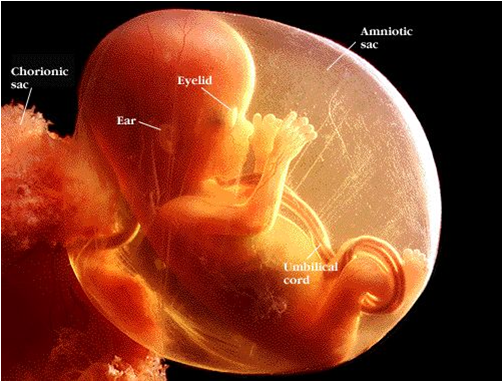
 Biologically   human life started in water, and the human body functioning depends 100% on water.
•      Water is a natural and renewable resource.
•      Meaning that it is not created by human being it occurs naturally and it can be re-used again and again by means of the hydrological cycle.
What are the water resources? 
Are water bodies that are useful to human being, Water resources include things like surface rivers, lakes, wells, waterfalls, swamps, ice caps, oceans, groundwater and wetlands.
Swamps
 A swamp is a wetland ecosystem characterized by mineral soils with poor drainage and by plant life dominated by trees..
Management
 Is the skillful handling or use of something such as resources  (Encarta dictionary, 2009).
-Management is a process therefore it needs planning- how (direction).
-It must have a goal and a purpose/reason 
Water Resources Management   is goal-directed process for controlling the development and use of all water assets for present and future generations. 


GE:340 QUESTIONS FOR GROUP PRESENTATION

QUESTIONS
1. Water is a renewable resource, yet the world's supply of clean, fresh water is steadily decreasing. Discuss.
2. Elaborate this statement “Water is a finite, natural, renewable and vulnerable resource”
3. Using examples in Tanzania elaborate the contention that “Water is unevenly distributed in time, space, quantity and quality”
 4. Discuss the strategies that were put by the 2002 National Water policy so as to achieve appropriate water resources development plans.
 5. What kind of information is needed for a sound, scientific, sustainable and workable water policy formation?
 6. As a water resources manager invited in the special international water summit to represent your country, explain to your audience the water resources available in Tanzania

7. Discuss the challenges for EIA implementation in Tanzania.
 8. Discuss the factors that influence the effectiveness of Environmental Impact Assessment
9. Elaborate the specific objectives of the water policy in the context of developing and managing urban water supply and sewerage services.
 10. Discuss the Terms of Reference as applied in project .Your discussion have to base on meaning, format and importance of ToR.
11. Discuss the Challenges to Water resources Management Integration.
12. Explain the role of environmental valuation in water resources management.
13. As a resource manager of Lake Zone river basin district, how can the contingent valuation method help you to put value to the Lake Victoria?


GE 340: WATER RESOURCES MANAGEMENT COURSE OUTLINE.


Lecturer:  Sister Mbegu- Office – old library - Geography Department.
Lecture hrs: 13:45 - 14:45 Wednesday (Venue M13)
                       11:45 - 13:45 Friday (Venue M10) 

Course Objectives:
The course provides students with knowledge of various issues of water resources planning and management in Tanzania.

Course Description

The course covers issues of utilization, planning tools for water resource management and the legislation pertaining to water resources in Tanzania.

Learning outcomes
At the end of the course students should be able to:
Ø Describe the distribution of water resource and explain the reasons for uneven distribution of water resources
Ø Explain the need for water resources development
Ø Present the social economic roles of water resources
Ø Explain the meaning of Environmental Impacts Assessment, Cost and Benefit Management Tools.
Ø Discuss the EIA process in Tanzania, its potentialities and Limitations
Ø Explain the role of Environmental Valuation in Water resources management
Ø Discuss different water resources management models in Tanzania
Ø Define River Basin Management
Ø Discuss the of Water use Conflicts in Tanzania’s River Basins
Ø Identify the solutions for Water use conflicts
Ø Analyse the current Tanzania Water policy and Water Act

Delivery: 45 lectures
Assessment: Coursework (40 %), Final examination (60 %)
                  Coursework: Test (20%), Group work (10%), Quiz (10%).

Course Outline:
Topic 1: Water as a resource (one week)
Ø Nature of water resources
Ø Distribution of water resource
Ø Demand of water
Ø Water resources development

Topic 2: Water resources utilization (2 weeks)
Ø Agricultural and industrial use
Ø Domestic and recreational use
Ø Hydropower generation
Ø Environmental flow
Ø Water related hazards

Topic 3: Planning and management tools (5 weeks)
Ø Environmental Impacts Assessment of water projects
Ø Water resources management models
Ø Cost and benefit analysis of water projects

Topic 4: Water Resources Management (3 weeks)
Ø River Basin Management
Ø Water Quality and Sanitation
Ø Policy and Legislation


READINGS:
Lawrance, D. (2003) Environmental Impact Assessment Practical Solutions to
               Recurrent Problems. John Wiley & Sons, Inc., Hoboken, New Jersey.


Rugemalila, R (2009) “Community  Mechanisms to Combat Water Shortages in Temeke    
               Municipality, Dar es Salaam, Tanzania” (Master’s Thesis), University of Dar es
               Salaam Press, Dar es Salaam, Tanzania.
Strahler,A and Strahler A.(2002) Physical Geography. John Wiley & Sons, Inc., Hoboken, New

           Jersey

The Republic of Tanzania(2002) National water policy.

The Republic of Tanzania (2012)  Ministry of Water; water sector status report.


INDIVIDUAL ASSIGMENT-READING THE WATER POLICY PAPER

 Read the water policy paper careful. Make sure you are able to write a brief overview of water issue or problem addressed, a brief discussion of what the potential solutions/policies are being discussed or debated or implemented, your own suggested policy solutions to the problem.

Wednesday, June 12, 2013

GE 145: SUMMARY OF THE WHOLE COURSE (preparation for Exam)

GE 145: SUMMARY
•      Topic 1: Principles of Environmental Education
1.1 Concepts and principles of environmental education
1.2 History and philosophy of environmental education
1.3 Approaches in environmental education
1.4 Acquisition of environmental knowledge
•      Questions on chapter one
•      State the goals and specific objectives of EE
•      There are 12 guidelines for EE. What are they?
•      Trace back the history and philosophy of EE.
•       Discuss the concept of environmentalism.
•      Criticize the deep ecology theory:
•       Comment on the Gaia hypothesis /theory/principle .
•      Discuss the approaches in Environmental Education   
Topic 2: The Environment and its challenges.
2.1 Physical and cultural components of the environment
2.2 Population, resources and environmental challenges

Questions on chapter two
•      Explain the concept that ‘’ An event can cause the changes to occur in one or more of the spheres and or an event can be the effect of changes in one or more of the earth’s four spheres”
•      Describe each of Earth's four spheres. List several examples of  features in each of the spheres.
•       Do you think clouds should be classified as part of the atmosphere, or part of the hydrosphere?  why?
Topic 3: Human Behavior, Culture and the Environment.
3.1Factors influencing human behavior towards the environment.
3.2The role of education awareness, attitude, motivation, and commitment to improve  Environmental quality.
 3.3 Changing detrimental environmental behaviors
Questions on chapter three.
•       Discuss how the following factors can influence human behavior towards environment:
Ø age
Ø laws and regulations,
Ø emotions,
Ø prompt and affordance
Ø beliefs, responsibility,
Ø Reinforcement and stress.
Topic 4: Skills and Expertise in Environmental Management
4.1 Methods in environmental education
 4.2 Waste management skills.
 4.3 Energy saving technology.

Questions on chapter four
•      Discuss the meaning, advantages, disadvantages of any of the following methods in teaching EE; field trip, role play, or discussion method.
•      Is lecture method recommended in teaching EE? Why?
•      Discuss the Bio-degradable Municipal waste; (BMW) as one of the waste categories.
•       Discuss recycling technique as the method of environmental conservational skill  
TOPIC 5: THE ROLE ENVIRONMENTAL EDUCATION IN SUSTAINABLE   DEVELOPMENT
•      Definition of sustainable development
•      Definition of sustainable environment
•      Global sustainable development
•      The role of EE in sustainable development
•      Curriculum development


KWAHERINI NYOTE KUMBUKA KUYATUNZA MAZINGIRA KOKOTE MUENDAKO

Special thanks from

Sr. Mbegu--------course instructor
Mr. Ngogo Mang'enyi-- Blog manager and administrator
Fr. Majuto, Revocatus------------Geography Class Representative

GOOGLE COMPANY for their technical assistance